Did Nikole Hannah Jones Betray Her Own Child?
Last week, award-winning author and writer Nikole Hannah-Jones was the hot topic of conversation. In an essay, she explained that she and her husband made the decision to send their daughter to an underfunded public school in New York, despite having the means to provide her with a much richer educational experience. Now that their daughter is old enough to understand the decision they made, she has expressed that she is not happy with it.
As the essay circulated across social media, the responses from Black families were strong and, in many cases, highly critical of Hannah-Jones and her husband’s decision.
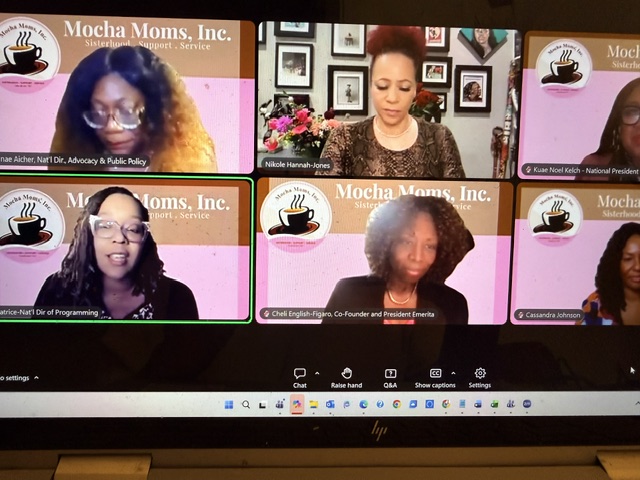
Mocha Moms, Inc. hosted a fireside chat with Hannah-Jones, which I had the opportunity to attend. As I listened to her speak about her experiences observing underfunded schools in New York and Detroit, I heard something deeper than a debate about school choice. I heard her heart.
She shared that when she looked at the children attending those schools, she considered them no different from her own daughter. She believed her daughter had the intellect and ability to overcome many of the challenges she might encounter. But she also believed that her family had a responsibility to help move the needle for the collective.
That statement stayed with me. I believe her essay was ultimately a call to action for each of us.
Many of us have the means to provide our children with educational opportunities that other families may not have. We may choose a top-rated public school, a sought-after charter school, a private school, tutoring, enrichment programs, technology, travel, or other opportunities to supplement our children’s education. And there is absolutely nothing wrong with wanting the best for our children. But perhaps we should also ask ourselves a difficult question:
What are we doing to help the children who don’t have access to those same resources?
It doesn’t necessarily mean that we have to make the same educational choices for our own children. It does mean that we can find ways to invest in children beyond our own households.
Sometimes that investment is financial. Sometimes it is our time. Sometimes it is simply making sure a family knows that an opportunity exists.
Organizations such as Kappa League, Delta GEMS, Boys & Girls Clubs, and countless other community organizations provide young people with mentorship, leadership development, educational exposure, and opportunities to see possibilities beyond their immediate circumstances. We can volunteer with these organizations. We can mentor. We can donate. We can share information with families who may not know these resources exist.
We can support the PTO at an under-resourced school. We can donate school supplies. We can provide professional exposure. We can speak to students about our careers. We can help a young person apply for a scholarship, internship, summer program, or college opportunity. No act is too small.
I don’t believe the answer is for every Black family with resources to make the same choices Hannah-Jones and her husband made. Every family has to make decisions based on what they believe is best for their children.
But perhaps the larger lesson is that we cannot only be concerned about the children sitting at our own dinner tables.
If we have figured out how to provide our children with access, exposure, mentorship, and opportunity, we should be asking ourselves how we can help extend some of that access to children who may not have it.
Our children’s success does not have to come at the expense of another child’s opportunity. We can pour into our own children while also creating pathways for other children to thrive.
Perhaps we should also be asking:
“What am I doing to make sure more children have the opportunity to succeed?”