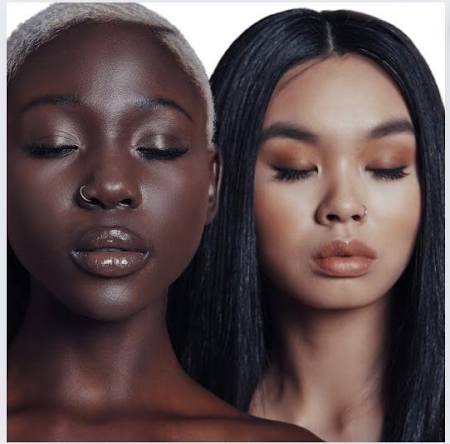
“She was light-skinned, had long hair, and could saannng,” these are the words I heard a famous record producer say during an interview as he described his initial attraction to his now estranged wife. This is colorism- favoring a person based on lighter skin tone.
A few years ago, colorism was perfectly acceptable in the Black community. Labels such as “high yella” and “red bone” plagued our culture, noting our preferences and separating us. Common backhanded compliments prevailed such as:
You are pretty to be dark-skinned
She has a pretty complexion
I love your black skin
All that good light-skinned gone to waste
Colorism birthed featurism, which increased the divide even more and caused people to despise the size of their nose, the shape of their eyes, the way their hair coiled, or the fullness of their lips.
It hasn’t left us. It changed. Colorism shows up today as media filters, light therapy, and birthing children with particular partners so they can be defined by terms such as exotic or ambiguous-looking. For many Black men and women, this behavior is often about survival because there is a privilege that comes with having a lighter skin tone. Darker skin has been associated with aggression and low culture. Because of that, lighter skin tones are more accepted and perceived as safer and less “black”.
Colorism doesn’t only impact the Black community. There are many cultures in which complexion is attached to social status. It’s the curse of European colonialism.
Colorism doesn’t end until we take steps to eradicate it. Awareness is only the first step. We need to explore our thoughts and ask ourselves how we arrived at our individual definitions of beauty. I’m not saying our preferences are wrong or that they should be judged; however, reevaluating our assumptions is healthy and facilitates growth.
When we embrace colorism, we uphold the legacy of colonialism, slavery, and self-hate. For this reason, celebrating the unique diversity in our skin tones is essential. Choose books, toys, movies, and media that actively feature and celebrate diverse and darker complexions. We didn’t choose this curse to plague our communities, but we can choose how long it lingers.